In short
Openers usually fail at the sensors, the drive gear or the logic board. In Farmington, a technician tests each one, fixes what can be fixed and explains the options plainly if a replacement is the better choice.
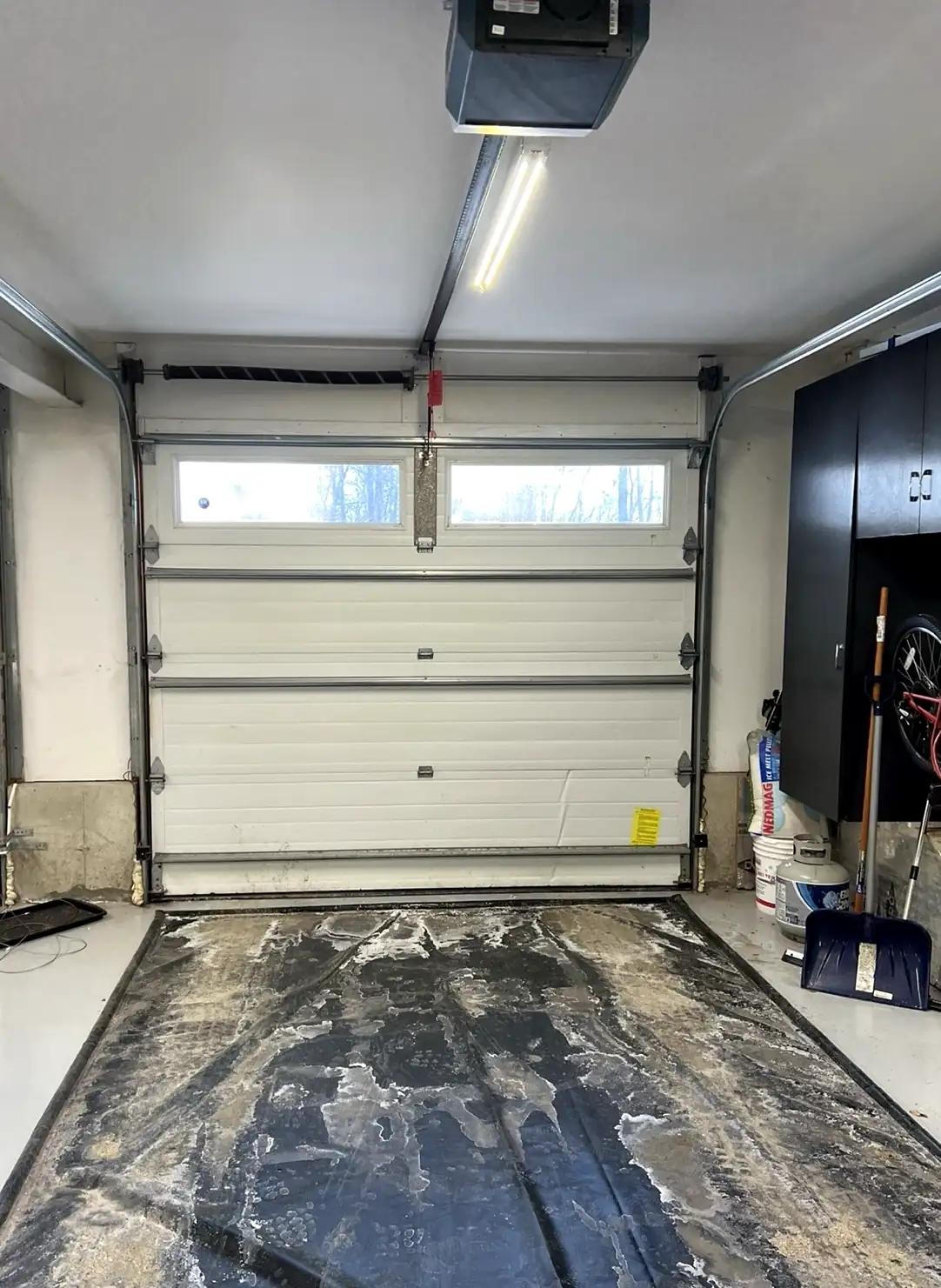
Openers in Farmington homes
Historic carriage houses along Main Street and older Unionville garages tend to have limited headroom and no outlet near the door. Wall-mount openers, installed once power is run, are a neat fit.
In the hillside neighborhoods, garages often sit below living space, so a quiet belt drive is the common choice. Valley ice storms make battery backup worthwhile.
What the symptoms point to
If the door starts to close and reverses, the photo-eye sensors at the bottom of the tracks are the usual suspect. An opener that hums without moving often has a stripped gear, or it's fighting a broken spring. When only the remote or keypad fails, it's batteries or programming. A completely silent opener is a power or circuit-board problem. Loud grinding means worn drive parts.
An opener should only guide the door, not lift it. So the first test is always the door's balance; a worn spring makes any opener fail early.
Repair or replace?
Sensors, remotes, gears and limit settings are usually worth repairing. A worn-out motor, a failed board on an older unit, or an opener with no safety reverse usually isn't. Replacement options include quiet belt drives, side-mounted jackshaft openers for high ceilings, and models with battery backup and smartphone control.
Around Farmington
- West District: Hillside subdivisions toward Burlington, with colonials and attached garages.
- East Farmington Heights: Near the West Hartford line, mostly mid-century homes.
See the full Farmington service area.
Questions we hear in Farmington
Our house is near the river. Does that matter?
Damp air rusts springs, cables and brackets faster. Coated parts are worth asking about.